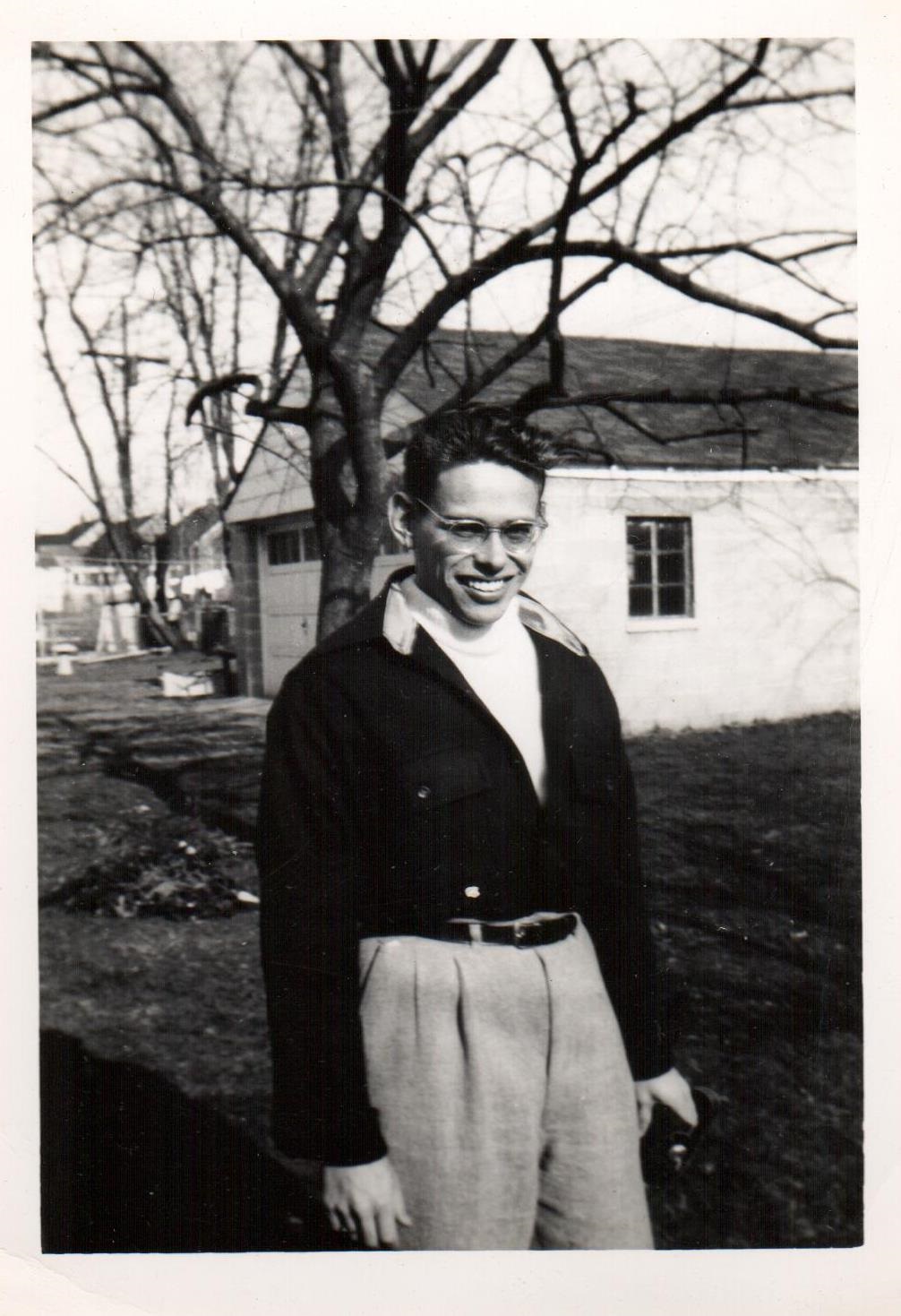
Ken Bourn, Jr. in January, 1953
Ken Bourn’s output was prolific. He created games, books, and other materials that reflected his interests in literacy, motivation, self-concept, history, cooperation, and humor.
His Literacy is For Everyone (LIFE) program was based on the Bourn Sound Method that he developed to help illiterate adults learn to read. It has been taught at Essex Community College and Harford Community College, and broadcast on local cable. He also wrote or developed additional materials to support those learning to read, such as the Pronunciary, and his book Jojo and the Space Program.
His Build A Better You (BABY) program has assisted people in evaluating their self-concept, identifying ways they might like to change, and setting realistic goals towards becoming the kind of people they would like to be.
Ken’s interest in literacy and self-concept went back to the 1950s and his earliest days of teaching at North Point Junior High and the Annex to North Point Junior High, where he saw how difficulty in reading and a low self-concept affected students’ ability to learn.
Ken was also a political campaigner and activist who defied easy categorization. He rallied voters to Barry Goldwater’s presidential bid and Art Helton’s local races. Yet he also sought out Harford County Public School guidance counselors to get them to commit to pro-actively supporting LGBT students.
He wrote and illustrated children’s books, including: The Pink Penguin, Eat Your Acorn Tops, Shoes on Their Ears, The True Story of Halloween, and The Blue-Nosed Bunny.
His historical interests led him to research and write works on local history, such as Joppa Town: The First City of Northern Maryland, and The Romance of the Rumsey Mansion.
Ken’s interest in encouraging people to learn how to cooperate led him to design games such as “Spoon the Prune” – an easy-to-learn card game in which all players can win.
As this brief and inevitably incomplete enumeration suggests, Ken channeled his prodigious creativity into a variety of projects. Despite their variety, all of these works share a common theme in that they represented attempts to help us see the opportunities we have to improve ourselves and to be better to one another. Ken continually repeated to the youth group at the Towson Unitarian Universalist Church a statement that captures the sentiment that motivated his life work: “I love you, I think you’re beautiful, I want you to be the best that you can be.”
 kenbournlife